
What Is the Perfect Wedding Day Timeline?
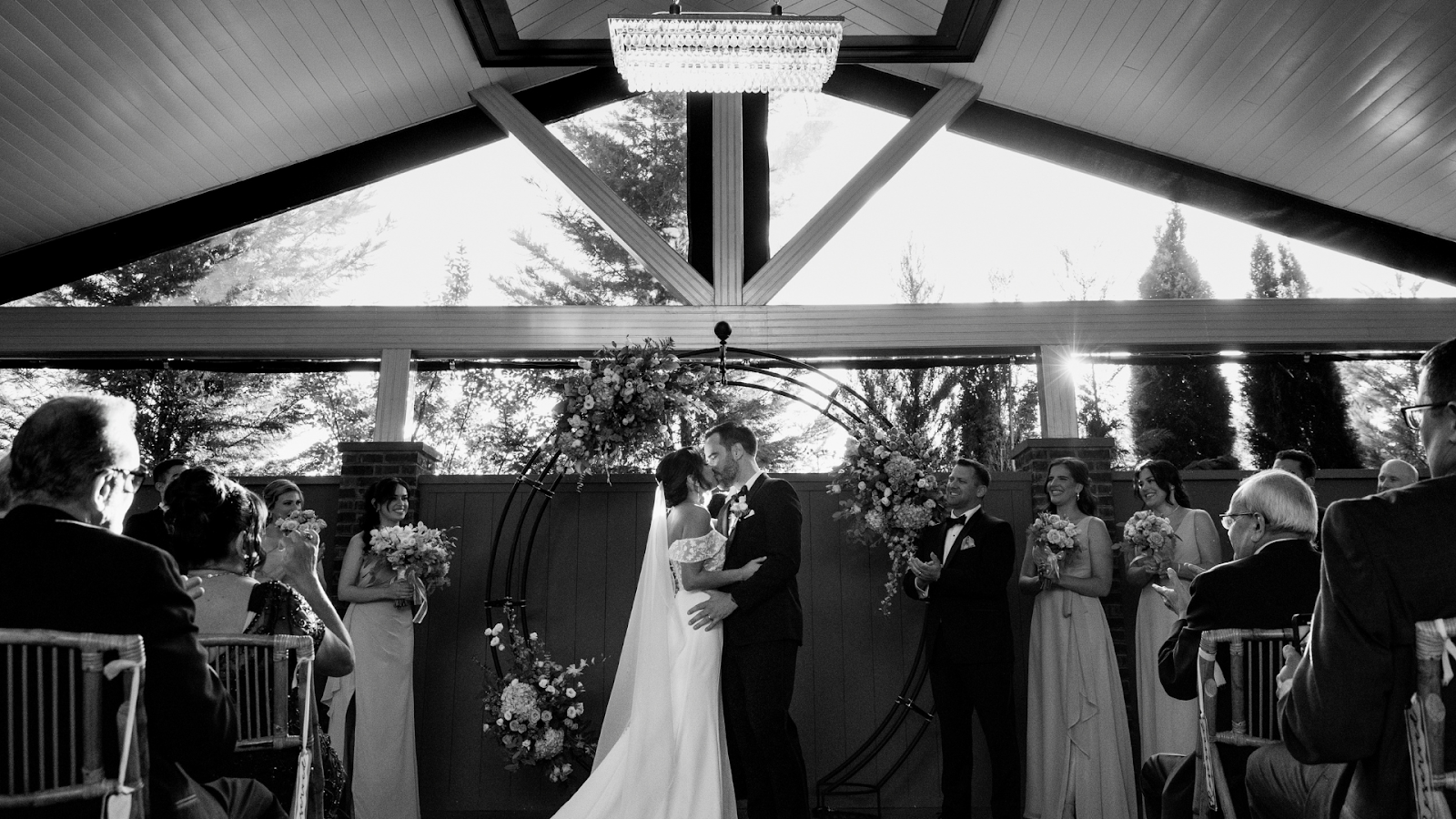
The “perfect” wedding day timeline isn’t the one that looks the cleanest on a spreadsheet.
It’s the one that feels calm when you’re living it.
Because on a real wedding day, things run late, people get emotional, somebody can’t find something, traffic does its thing… and the last thing you want is a day that feels like you’re being rushed from photo to photo.
When we create timelines for our couples, we do it based on how much time we need as photographers for each part of your day, allowing us to tell your story and create that custom, one-of-a-kind artwork for you (the kind you’ll actually want printed in an album, forever).
So here’s how we build a wedding day timeline that works, plus sample timelines you can copy, a decision guide for first look vs no first look, NJ timing realities, and a free downloadable checklist.
The 3 Rules of a Timeline That Actually Works
1) Build the day around the flow, not “photo time.”
The best photos don’t come from scheduling “1:00–2:00 Photos.”
They come from real moments happening inside the day: letters, gifts, family reactions, quiet minutes together, hugs after the ceremony, the way your people show up.
We plan the timeline so those moments have room to happen.
2) Buffers aren’t optional
Every wedding needs padding. Period.
Hair & makeup runs late. The church runs long. Traffic exists. Uncle Joe disappears right when family photos start.
A timeline with no buffer is basically a timeline planning to be stressful.
3) Decide early: First Look vs No First Look
This is the decision that changes everything, especially in NJ, where travel and venues can turn “10 minutes away” into 35 minutes real fast.
Getting Ready: How We Structure It (So It Doesn’t Waste Time)
Groom prep: details first, then getting dressed
When we arrive, we start with the groom’s details (watch, cufflinks, tie, shoes, etc.)—so have those out and ready. Then we photograph him getting dressed.
Anyone who’s in the room should be dressed and ready before we arrive.
Bride prep: details + finishing touches (not half-done hair and makeup)
When we arrive for bride prep, we start with your details (shoes, jewelry, veil, bouquet, invite, etc.). We like you to be wrapping up hair and makeup as we arrive.
If you’re doing matching robes or tees, we photograph that first, along with your details and a few finishing touches.
Because no bride ever chooses album photos from before her hair and makeup are close to finished, and it eats up time for no reason.
Keep rooms tidy
This matters more than people realize.
Keep both rooms tidy and free of clutter, especially near windows. Keep anything you have out to one area and away from the window so we can use the best possible light, and your images don’t look chaotic.
Note about our timelines (and why our prep times may look different)
Most photography teams split up in the morning—one photographer with each partner—so they can cover both getting ready at the same time.
Melissa and I do it differently: we don’t separate. We photograph your day together on purpose.
That means your timeline usually has groom prep first, then bride prep (or vice versa) instead of happening simultaneously. The benefit is huge: we don’t have to manufacture moments, repeat real moments, or over-direct you to “recreate” something for the camera.
We’d rather adjust the timeline than manufacture moments.
Why We Don’t Split Up During Getting Ready
Most teams treat the morning like a coverage problem to solve—split up, grab content, move on.
We treat it like the beginning of your story.
We don’t separate because when one person is missing, you often get:
Staged moments to fill gaps (“do that again but slower”)
Repeated moments that aren’t real anymore
Extra direction to “create” what didn’t actually happen on camera
When we’re together for each of you, we can work quietly, read the room, and document what’s actually happening without turning your morning into a production.
That’s why our timelines are built with staggered prep times, and why our photos feel natural instead of posed.
Why our timelines are built around real moments, not performance
A lot of wedding day timelines are designed like a shoot schedule: do this, stand here, look this way, repeat it for the other camera.
That’s not how we work.
Our timelines are built to protect real moments, because those are the images that end up living in your album. Not the “perfect” forced ones. The real ones: your dad seeing you, the way your friends react when you’re finally dressed, the quiet minute you two get before the ceremony, the hug that lingers a second longer than expected.
When the timeline gives you space to be present, your photos don’t need to be “created.” They happen. And that’s what makes your wedding feel like a story you can hold in your hands later.
Our Timeline Process (Custom, for Every Couple)
One thing we do for every couple: we create a custom wedding day timeline for you. Not a generic template. Not a “copy/paste and hope it works.” Your day, your locations, your priorities, your people.
Step 1: After you book, we send a welcome email + timeline questionnaire.
This is where you fill in all the wedding day details we need to build your schedule, prep locations, ceremony timing, travel, bridal party/family photo priorities, special moments, and anything that matters to your story.
Step 2: We build your first draft timeline.
We create the schedule based on what we need as photographers to tell your story naturally and create artwork you’ll actually want in your album, while keeping the day calm and realistic
Step 3: 2–4 weeks before the wedding, we do the timeline review call.
This is where we walk you through the flow so you know what to expect, and we fine-tune everything with real-world details that can’t be guessed months in advance.
On that call, we ask about the things that make your wedding yours:
Heirlooms, patches, stitching, pins for loved ones who’ve passed
Ceremony specifics (a singer, cultural pieces, special readings, anything unique)
Special dances (first dance + parent dances)
How many toasts and who’s giving them
Any special exit or ending to the night
That call is where the timeline goes from “solid” to dialed in.
Real Sample Wedding Day Timelines
Example 1: Same Hotel + Same Venue + First Look (Family Before Ceremony)
Groom Prep | 12 pm–1 pm
Bride Prep | 1 pm–2:30 pm
Travel to the venue + set up the first look
First Look & Creatives | 3pm
Family & Bridal Party | 4:30pm
Time on Invite | 5:30 pm
Ceremony | 6 pm
Cocktail | 6:30 pm–7:30 pm
Reception | 7:30 pm–11:30 pm
Why it works: Portraits and family are done before guests arrive, you’re not cramming everything into cocktail hour, and the day feels smoother.
Example 2: Different Homes + Church Full Mass + Photo Stop + Venue (No First Look) + Venetian Hour
Groom Prep | 10 am–11 am
Bride Prep | 11:30 am–1 pm
Travel & Setup | 1pm
Time on Invite | 2 pm
Ceremony | 2 pm–3 pm (Full Mass)
Family, BP, Creatives & Travel | 3pm–6pm
Cocktail Hour | 6 pm–7:30 pm
Reception | 7:30 pm–12:30 am
Why this needs planning: church timing + travel + portraits can’t be “squeezed.” This timeline works because it gives a real window for everything after mass.
Example 3: Everything in One Place + First Look
Groom Prep | 12 pm–1 pm
Bride Prep | 1 pm–2:30 pm
Setup, First Look & Creatives | 2:30pm–4pm
Family & Bridal Party | 4 pm–4:30 pm
Time on Invite | 5 pm
Ceremony | 5:30 pm
Cocktail | 6 pm–7 pm
Reception | 7 pm–11 pm
Why it works: one location + first look = the calmest pacing.
Example 4: Everything in One Place, No First Look (Tight)
Groom Prep | 2:30 pm–3:30 pm
Bride Prep + First Look w/ Dad | 3:30 pm–5 pm
Time on Invite | 5 pm
Ceremony | 5:30 pm–6 pm
Family & Bridal Party | 6 pm–6:30 pm
Creatives | 6:30 pm–7 pm
Cocktail | 6 pm–7 pm
Reception | 7 pm–11 pm
Real talk: this is tight because family + creatives overlap cocktail hour. It can work, but you’ll likely miss most of cocktail hour unless you extend it or simplify the photo list.
First Look vs No First Look Decision Guide
If you’re stuck on this decision, here’s the simplest way to choose:
Choose a First Look if…
You want the day to feel calmer and less rushed
You want more time together before the ceremony
You want most portraits + family photos done before guests arrive
You want to actually attend cocktail hour (or at least part of it)
You have multiple locations or travel time (hello, NJ)
Bonus: Your coming down the aisle moment will still be special, and full of emotion. We have proof!
Skip the First Look if…
You’re having a church ceremony with time in between for photos
The aisle moment is non-negotiable for you
You love tradition and want that first reaction at the ceremony
You’re okay with portraits happening during cocktail hour
Your family list is manageable, and your venue flow is tight
The trade-off: no first look almost always means less flexibility and more pressure after the ceremony, especially if the ceremony runs long.
NJ Timing Notes (The Stuff People Don’t Tell You)
1) “It’s only 15 minutes away” is not real
In NJ, travel time is a lie unless you add padding.
What to do:
Add 10–15 minutes to every drive time
Add parking time + walking time
Add extra buffer if it’s a Friday, near a bridge/tunnel, or near rush hour
2) Church ceremonies run longer than you think
If you’re doing a full Catholic mass, a Greek mass, a full Jewish ceremony, etc, plan on it taking about an hour, sometimes longer. And some churches have rules about:
Where photographers can stand
Whether flash is allowed
When and where you can do photos inside the church
We plan around those realities so it doesn’t throw off the rest of the day.
3) Venue pacing is everything
A lot of NJ venues run on a tight schedule:
Entrances happen at a specific time
Kitchen timing matters
Toasts may need to be earlier than you imagined
A good timeline works with the venue flow, not against it.
Quick FAQ
-
Most teams split up.We don’t. We photograph together so we can document the morning naturally, without recreating moments or giving a ton of direction. That’s why prep is staggered in our timelines and it’s a big reason our photos feel real.
-
Typically about 30 minutes, but it depends on how many groupings you want. Plan 1-2 minutes per grouping, and it stays smooth.
-
If you want portraits + family + bridal party photos after the ceremony, a 90-minute cocktail hour can be a game-changer, especially in NJ. If you’re having a church ceremony with a gap between church, and cocktail you’ll be good with a one hour cocktail.